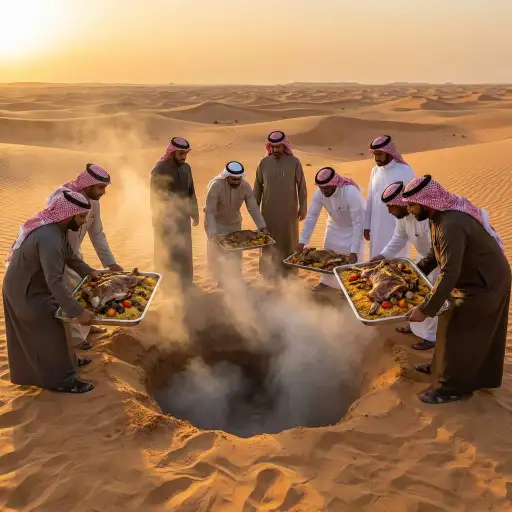
In the deserts of the Arabian Peninsula, Mutton Mandi was traditionally a dish reserved for weddings, tribal gatherings, and great celebrations. The star of such feasts was invariably the Mutton Kuzhimandi — a slow-cooked masterpiece that symbolized generosity, hospitality, and culinary mastery. At Al Razi, we bring this royal banquet to your plate with the same reverence it commands in Yemen, serving it alongside our celebrated Chicken Mandi and bold Beef Mandi at all six of our Kerala locations.
The Royal Heritage of Mutton Mandi
Mutton Mandi holds a special place in the culinary hierarchy of the Arabian Peninsula. In Yemeni culture, the type of meat served at a gathering directly reflects the importance of the occasion and the host's regard for their guests. While chicken is common for everyday meals and family dinners, mutton (or lamb, as it is known in the Gulf region) is reserved for occasions of significance — weddings, Eid celebrations, the arrival of honored guests, and tribal feasts that bring communities together.
This cultural significance has its roots in the nomadic Bedouin traditions of the Arabian desert. For centuries, goats and sheep were the primary livestock of desert communities, prized for their ability to survive harsh conditions while providing milk, wool, and eventually meat. Preparing a whole goat for a feast was a gesture of supreme hospitality — the host was essentially sharing their most valuable resource with their guests. The cooking method that evolved — slow-roasting in an underground pit — was born of necessity in an environment where fuel was scarce and every drop of moisture had to be preserved.
From Desert Tradition to Al Razi's Table
At Al Razi, we honor this heritage by treating our Mutton Kuzhimandi as the premium offering on our menu. Every aspect of its preparation — from sourcing to serving — reflects the respect this dish demands. When a customer orders our Mutton Mandi, they are not just ordering a meal; they are experiencing a centuries-old tradition that has been carefully preserved and brought to Kerala with uncompromising authenticity.
Mutton Mandi During Eid and Special Occasions
The significance of Mutton Mandi reaches its peak during Eid al-Adha — the Festival of Sacrifice — when the consumption of mutton carries deep spiritual and cultural meaning across the Muslim world. At Al Razi, Eid brings our most intense cooking cycles of the entire year. Families across Kerala pre-order our Mutton Kuzhimandi days in advance, planning their Eid celebrations around our cooking schedule. The sight of golden Mandi platters being carried to family gatherings, surrounded by excited children and visiting relatives, is a scene that plays out at hundreds of homes served by our six outlets during Eid week.
But Mutton Mandi at Al Razi is not reserved exclusively for religious occasions. We see equal demand during Onam festivities, Christmas celebrations, wedding anniversaries, and even corporate events where hosts want to impress colleagues with a premium culinary experience. The universal appeal of tender, aromatic mutton transcends community boundaries — a truth beautifully reflected in our diverse customer base.
Sourcing the Best Mutton in Kerala
A great Mutton Mandi starts long before the cooking begins — it starts with the sourcing. We are extremely particular about our mutton selection, maintaining standards that many would consider obsessive. We use only young goat meat, specifically choosing animals between 6 and 12 months of age, which ensures a texture that is buttery and soft, never chewy or gamey.
Our Sourcing Standards
We have established long-term relationships with trusted local suppliers who understand our requirements intimately. Every delivery is inspected by our kitchen team for freshness, color, marbling, and fat distribution. We reject any cuts that do not meet our standards, regardless of the supply pressure this creates. We believe that premium ingredients are half the battle won — no amount of cooking skill can compensate for inferior raw materials.
The cuts we select for our Mutton Mandi are specifically chosen for their suitability to slow-cooking. Shoulder, leg, and rack pieces provide the ideal combination of lean meat and intramuscular fat that melts during the extended cooking process, self-basting the meat from within. This careful selection ensures that every serving of our Mutton Kuzhimandi achieves the melt-in-your-mouth tenderness that our customers have come to expect.
The Traditional "Dum" Cooking Technique
Our Mutton Kuzhimandi is prepared using the 'Dum' style of cooking — a technique that originated with Bedouin tribes in Yemen and has been preserved virtually unchanged for centuries. The word "Dum" refers to the process of sealing and slow-cooking, where the meat is enclosed in a controlled environment that traps steam, flavors, and aromatic compounds.
The Sealed Environment
In our custom-built tandoors, the marinated mutton is suspended over carefully maintained charcoal embers while our signature aromatic rice is placed in heavy-bottomed vessels below. The tandoor is then sealed, creating a closed cooking environment where the temperature remains consistent and the moisture has nowhere to escape. This sealed environment traps the steam and flavors, creating a natural pressure effect that works on the mutton fibers over hours.
The Transformation
As the sealed tandoor works its magic over several hours, something extraordinary happens. The sustained, even heat causes the collagen in the mutton to slowly convert to gelatin, transforming tough connective tissue into silky, unctuous richness. The marination spices — cardamom, cloves, dried lime, cinnamon, and our secret blend of aromatics — infuse deeper into the meat as the fibers relax and open. Meanwhile, the rich, concentrated juices from the mutton cascade down onto the rice below, carrying with them the complex flavors of meat and spice.
The pressure softens the fibers of the mutton to a degree that is simply impossible with any shortcut method. The final result is meat that literally melts in your mouth — a delicacy that rewards the patience and skill required to prepare it. The rice, meanwhile, has absorbed the concentrated mutton drippings and aromatic steam, gaining a rich golden hue and a depth of flavor that is the hallmark of genuine Dum-cooked Mandi.
Why Al Razi Mutton Mandi is Kerala's Best
Served with our spicy 'Salata' (tomato salsa) and mild yogurt dip, the Al Razi Mutton Mandi is a complex symphony of flavors — rich, earthy, deeply satisfying, and unlike anything else available in Kerala. Our Mutton Kuzhimandi features:
However, for an everyday meal, many regulars have discovered a brilliant workaround: ordering a Full Chicken Mandi or Beef Mandi, and adding just one portion of Mutton on the side to share. This "mixed platter" approach allows families to enjoy the premium taste of slow-cooked lamb without the premium price tag of a full Mutton feast, showcasing the versatility and customer-focused dining options available at all Al Razi branches.
- Premium Goat Meat: Young, tender cuts selected and inspected daily
- Dum Cooking: Traditional slow-cooking technique preserved from Yemeni heritage
- Aromatic Rice: Aged Basmati naturally infused with meat juices and spice-laden steam
- Perfect Accompaniments: Salata, yogurt dip & authentic Arabic pickles
- Generous Portions: Every serving reflects the spirit of Arabian hospitality
The Premium Choice
Our Mutton Mandi is the premium choice on the Al Razi menu, and our customers treat it accordingly. It is the dish ordered for special occasions — birthday celebrations, anniversary dinners, family reunions with returning NRIs, and festive feasts during Onam, Christmas, and Eid. At our Tirur outlet, Mutton Mandi outsells all other dishes, a testament to the Malabar region's deep appreciation for premium mutton preparations.
Understanding Mutton Mandi Pricing
Our Mutton Kuzhimandi is priced higher than our Chicken and Beef variants, and we believe in being transparent about why. Young goat meat is inherently more expensive than chicken or beef per kilogram — the animals are smaller, take longer to raise, and the yield per animal is lower. Compounding this, we select only the choicest cuts (shoulder, leg, and rack) and reject any that do not meet our standards, further reducing our usable yield from each purchase. The extended cooking time also adds operational cost: our tandoors run longer for mutton than for any other protein, consuming more fuel and requiring more kitchen staff time for monitoring.
Despite these inherent costs, we have structured our pricing to make Mutton Mandi accessible for regular family dining, not just special occasions. Our regular customers tell us that the quality-to-price ratio of our Mutton Kuzhimandi is exceptional — many have compared it favorably to mutton dishes at restaurants that charge significantly more. Check our latest offers at outlets in Thiruvalla, Kottayam, and Tirur for combo deals that include Mutton Mandi at special prices. Our commitment to quality over everything else has made Al Razi the definitive destination for authentic Mutton Kuzhimandi in Kerala, trusted by families across all six districts we serve.
Where to Experience Al Razi Mutton Kuzhimandi
Experience the royal feast of Arabian Mutton Mandi at any of our 6 Al Razi locations across Kerala — Thiruvalla, Adoor, Kottayam, Alappuzha, Tirur, and Vettichira. Each outlet maintains the same uncompromising standards for our Mutton Kuzhimandi, ensuring that wherever you visit, you receive the same royal treatment.
We also offer our Mutton Mandi for takeaway and bulk orders, perfect for home celebrations and events. Given the extended preparation time, we recommend pre-ordering for groups of eight or more to ensure availability. Our specially designed packaging preserves the tenderness, heat, and aroma of the mutton for home enjoyment.
Explore More from Al Razi
Frequently Asked Questions
Why is Mutton Mandi considered a premium dish?
Mutton Mandi uses premium cuts, longer cooking time, and a richer flavor profile, so it is often associated with celebrations and special meals.
What cut of meat is best for Mutton Mandi?
Slow-cooking cuts such as shoulder and leg are ideal because they stay juicy and release flavor into the rice over time.
What does dum cooking do in Mutton Mandi?
Dum cooking traps steam and aroma, helping the mutton soften gradually while the rice absorbs deep meat flavor and spice.
Is Mutton Mandi available for family dining in Kerala?
Yes. Mutton Mandi is a popular platter choice for family dinners, celebrations, and group dining across Kerala.
Why does Mutton Mandi take longer to prepare?
Mutton needs slower cooking than chicken so the fibers soften properly without drying out, which is why preparation takes more time.
Is Mutton Mandi spicy?
Most Mutton Mandi is medium in spice, with emphasis on aroma, meat richness, and balance rather than heavy chili heat.
What makes Al Razi Mutton Mandi stand out?
Al Razi focuses on tender cuts, slow cooking, well-aged basmati rice, and stable quality across all outlets.
Why is it sometimes spelled as mandhi?
The dish is widely known as mandi, but it is also spelled mandhi, manthi, or kuzhimandhi in Kerala due to phonetic translation from Arabic.