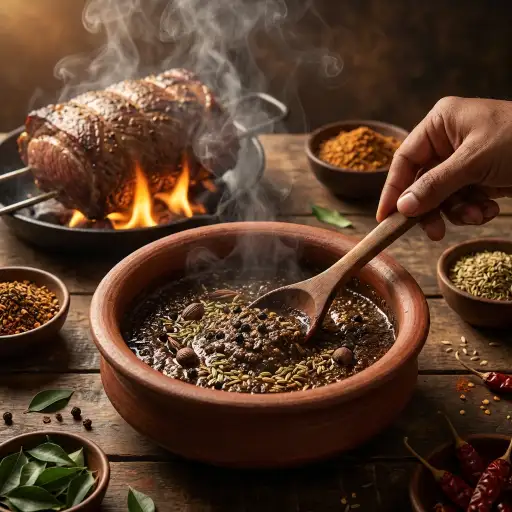
While Chicken and Mutton are traditional staples of Arabian cuisine, Beef Mandi has carved a special place in the hearts of food lovers in Kerala. It represents a beautiful cross-cultural exchange — the slow-cooking technique of Yemen meets the robust, beef-loving palate of the Malabar coast and Central Travancore. At Al Razi, our Beef Kuzhimandi is not just a menu item; it is a tribute to the evolving culinary landscape of a state that considers beef an integral part of its food identity.
Kerala and Beef: A Cultural Connection
To understand why Beef Mandi has become such a phenomenon in Kerala, one must first understand the deep cultural connection between Kerala and beef. Unlike many other Indian states, Kerala has a long and celebrated tradition of beef consumption that cuts across religious and community lines. From the iconic "Kottayam Style Beef Fry" to the humble "Porotta and Beef Curry" found at every junction in the state, beef is woven into the culinary DNA of Kerala.
This cultural affinity means that when Arabian Mandi arrived in Kerala, it was only natural that beef would become a starring ingredient. The Yemeni cooking technique — slow-roasting over charcoal in a sealed tandoor — transforms beef from a familiar ingredient into something extraordinary. The low, even heat breaks down the tough connective tissues over hours, resulting in meat that is incredibly tender while retaining the robust, full-bodied flavor that beef lovers crave.
Why Beef Mandi is Uniquely Kerala
While traditional Yemeni Mandi primarily features chicken and lamb, the addition of beef as a Mandi protein is largely a Kerala innovation — a beautiful example of how immigrant cuisines adapt to local tastes while maintaining their core techniques and philosophy. At Al Razi, we embraced this evolution wholeheartedly, developing a Beef Kuzhimandi recipe that honors both the Arabian cooking tradition and Kerala's passionate relationship with beef. The result is a dish that you will not find in Yemen or Saudi Arabia — it is authentically Al Razi, authentically Kerala-Arabian.
Kerala's Diverse Beef Traditions
To truly appreciate what makes our Beef Mandi special, it helps to understand the landscape of beef preparations already beloved in Kerala. The Kottayam Style Beef Fry is a dry preparation with coconut slivers and curry leaves — intensely spiced and designed to be eaten with steaming rice or fluffy appam. The Malabar Beef Curry is a rich, coconut-milk-based gravy that coats pathiri or chapati. Porotta and Beef is the working-class staple found at every toddy shop and junction eatery across the state. Each of these preparations showcases beef differently, and each has its own passionate following.
What Al Razi’s Beef Kuzhimandi brings to this landscape is something none of these preparations offer: the pure, unadulterated flavor of beef enhanced only by aromatic spices and slow-roasting. There is no coconut milk to soften the edges, no deep frying to create a crust, no heavy gravy to mask shortcuts in meat quality. Our Beef Mandi exposes the beef completely — every flaw in freshness, every shortcut in marination, every temperature inconsistency during cooking would be immediately evident. This transparency is what makes our Beef Mandi both the most technically demanding dish in our kitchen and the most rewarding when executed perfectly.
The Bold Marination Process
Beef requires a bolder hand with spices than chicken or mutton. The strong, earthy flavor of beef needs a spice profile that can stand alongside it without being overpowered. Our chefs have developed a special marinade over years of experimentation — a blend that includes generous amounts of freshly cracked black pepper, aromatic fennel seeds, a hint of roasted cumin, and our signature dried lime (loomi) that provides a subtle citrusy tang.
The 24-Hour Marination Commitment
We allow the meat to rest in this marinade longer than any other protein in our kitchen — a full 24 hours. This extended marination period is critical for beef because the larger, denser muscle fibers need more time to absorb the flavors. During these 24 hours, the acidic components in the marinade — yogurt and lemon juice — gently break down the protein structures, tenderizing the meat from within while the spice blend infuses its complex flavors into every layer of the cut.
This is not a step we can rush. Many restaurants marinate beef for just 4-6 hours to save time, but the difference is immediately apparent in the final dish. Our 24-hour process ensures that when you cut into our Beef Kuzhimandi, the flavors are consistent from the surface to the very center — not just a spicy crust over bland interior meat, but a completely permeated, deeply flavored piece of beef that rewards every bite.
Slow-Roasted to Perfection
To ensure our beef achieves the signature Mandi tenderness, we slow-roast it at a carefully calibrated lower temperature for a significantly longer duration than our chicken preparations. This extended cooking time is essential because beef's connective tissues — primarily collagen — require sustained heat over time to break down into gelatin, which is what gives our Beef Mandi its characteristic melt-in-the-mouth texture.
The Science of Slow Cooking Beef
Our custom-built tandoors maintain a consistent temperature zone that is ideal for collagen breakdown without drying out the meat. The sealed environment traps moisture, essentially creating a natural pressure-cooking effect that keeps the beef incredibly juicy throughout the slow-roasting process. The charcoal embers provide a gentle, even heat that circulates around the suspended meat, ensuring uniform cooking from all sides.
When served atop our fragrant Mandi rice — itself infused with the rich, beefy drippings that have cascaded down during the cooking process — the contrast between the bold, deeply spiced beef and the subtle, aromatic rice creates a culinary experience that keeps our customers coming back for more. It is a dish of contrasts and complements: robust yet refined, bold yet balanced, intensely flavored yet never overwhelming.
Premium Cut Selection
Not all beef cuts are suitable for Mandi. We specifically select cuts that have the right balance of lean meat and marbling — enough fat to keep the meat moist during the extended cooking process, but not so much that the final dish feels greasy. Our kitchen team inspects every cut for freshness, texture, and marbling quality before it enters the marination process. We source exclusively from trusted local suppliers who share our commitment to quality and freshness.
Why Kerala Loves Al Razi Beef Mandi
Our Beef Kuzhimandi has become a phenomenon across our six Kerala locations, but it is particularly celebrated at our Kottayam outlet — a city that considers itself the beef capital of Kerala. When the Achayans of Kottayam — known across the state for their discerning meat palate — endorsed our Beef Mandi, it was the ultimate stamp of approval.
- Bold: Robust spice profile perfectly calibrated for the Kerala palate
- Tender: 24-hour marination combined with extended slow-roasting
- Premium: Only the finest beef cuts, inspected for quality daily
- Unique: A Kerala-Arabian fusion you will not find elsewhere
- Consistent: Same exceptional quality at all 6 Al Razi locations
Popular Across All Demographics
What surprises many people is the breadth of our Beef Mandi's appeal. It is not just popular among traditional beef-eating communities — it has won fans across all demographics. College students in Kottayam, families in Thiruvalla, truck drivers stopping at our Vettichira highway outlet, and tourists visiting Alappuzha — all have embraced our Beef Kuzhimandi as a must-try dish that represents the best of Kerala's evolving food culture.
The Beef Mandi vs Porotta Debate
An interesting cultural debate has emerged at our outlets: should beef be eaten with Mandi rice or with porotta? Our regular customers are passionately divided. Traditionalists argue that Mandi rice — infused with the natural drippings of the beef during cooking — is the only appropriate accompaniment, as it provides a subtle, aromatic backdrop that lets the beef's flavor shine. Porotta enthusiasts, however, love tearing soft, layered bread and using it to scoop up our tender beef pieces, creating a tactile, hands-on eating experience that feels distinctly Kerala.
Our answer? Both are valid, and we serve both with equal enthusiasm. Many of our Kottayam and Adoor customers order Beef Mandi with extra porotta on the side — the best of both worlds. This willingness to adapt the Arabian dining format to Kerala preferences is what makes our Beef Mandi a genuine fusion success story rather than a rigid import. In Kerala, Beef Mandi is rarely eaten plain. It demands bold accompaniments. A dollop of Al Razi's special garlic paste (thoum), a spoonful of spicy tomato salsa (salata), and a squeeze of fresh lemon juice cut through the richness of the beef fat. We always serve our Beef Mandi with these essential sides because they are critical to the flavor balance. Without the acidity of the salata and the bite of the garlic, the slow-roasted beef would be too heavy; with them, every mouthful is a perfectly orchestrated symphony of rich, sharp, and spicy notes. This carefully curated balance of flavors is what transforms a simple rice and meat dish into a genuinely unforgettable culinary experience that brings our customers back week after week. For the best value on our Beef Mandi, check the current combo deals at our nearby outlets.
Try Our Beef Kuzhimandi Today
Experience the bold flavor of Arabian Beef Mandi at any of our 6 Al Razi locations across Kerala — Thiruvalla, Adoor, Kottayam, Alappuzha, Tirur, and Vettichira. Whether you are a lifelong beef enthusiast or trying this Kerala-Arabian fusion for the first time, our Beef Kuzhimandi promises an experience that is bold, authentic, and unforgettable.
Our Beef Mandi is available for both dine-in and takeaway at all outlets. We also handle bulk orders for events, parties, and celebrations. For the best experience, we recommend our Beef Mandi with a side of our spicy Salata (tomato salsa) and cool yogurt dip — the perfect accompaniments that balance the rich, bold flavors of the beef.
Explore More from Al Razi
Frequently Asked Questions
What makes Beef Mandi popular in Kerala?
Beef Mandi combines the slow-cooked Arabian mandi method with the bold beef flavors many Kerala diners already enjoy.
Is Beef Mandi an authentic Arabian dish or a Kerala adaptation?
Beef Mandi in Kerala is best understood as an Arabian-inspired local adaptation that uses the mandi method with beef to suit regional demand.
How is Beef Mandi different from Chicken or Mutton Mandi?
Beef Mandi is deeper and bolder in flavor, with a denser meat texture and a richer finish than chicken or mutton versions.
Which rice is used for Beef Mandi?
Long-grain basmati rice is preferred so the grains stay separate and absorb the beef drippings without becoming heavy.
Why does Beef Mandi need longer marination?
Beef benefits from extended marination so the spice blend and tenderizing ingredients reach deeper into the meat fibers.
Is Beef Mandi spicy?
Beef Mandi often tastes bolder than Chicken Mandi, but the goal is balanced spice with strong aroma rather than extreme heat.
Where is Beef Mandi especially popular at Al Razi?
Beef Mandi is especially popular at locations such as Kottayam, though it has regular demand across all Al Razi branches.
Why is it sometimes spelled as mandhi?
The dish is widely known as mandi, but it is also spelled mandhi, manthi, or kuzhimandhi in Kerala due to phonetic translation from Arabic.